Starting a Café-Roastery: Equipment Budget Planning Guide
Equipment Budget: The Foundation of Your Café-Roastery
Your equipment budget typically represents 30–45% of your total startup investment. In a café-roastery, you need to fund both production equipment (roaster, grinder, packaging) and customer-facing service equipment. Getting the balance right means you can roast fresh, sell retail bags, and serve drinks from day one without overspending.
This guide breaks down equipment costs by category for a small café-roastery roasting 20–100kg per week.
Total Equipment Budget Overview
| Category | Budget Range | % of Total |
|---|---|---|
| Coffee roaster | $8,000–45,000 | 35–50% |
| Grinder(s) | $1,500–6,000 | 10–15% |
| Packaging & sealing | $2,000–8,000 | 8–12% |
| Water filtration | $400–1,200 | 2–4% |
| Café service equipment | $3,000–10,000 | 15–20% |
| Small tools & consumables | $500–1,500 | 3–5% |
| POS & technology | $500–1,500 | 2–4% |
| Furniture & layout | $1,500–4,000 | 5–8% |
| Total | $17,400–77,200 | — |
1. Coffee Roaster Investment
This is usually your single largest equipment purchase. Choose based on weekly roasting volume and growth plans — our guide to choosing your first roaster — sample, shop, or production breaks down which archetype fits your first 18 months.
Budget Tiers
Sample / R&D roaster ($2,000–8,000): 100g–1kg capacity for profile development and quality control. Essential even if you outsource initial production.
Shop roaster ($8,000–25,000): 3–15kg capacity. The standard starting point for most café-roasteries producing 20–80kg per week.
Production roaster ($25,000–80,000+): 30–120kg capacity for wholesale-focused operations or high-volume retail. Typically added after validating demand.
Money-Saving Tips
- Start with a shop roaster, not a production model — upgrade once your weekly output justifies it
- Buy proven designs — avoid experimental equipment without a service network
- Factor in venting and installation — these can add $2,000–10,000 to the total. Our guide to choosing and setting up a roastery location covers the power, ventilation, and zoning requirements to plan for.
- Bundle roaster + grinder + packaging — many suppliers offer package discounts
2. Grinder Selection and Budget
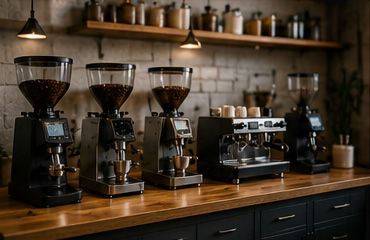
You’ll need at least two grinders: one for production/cupping and one for café service.
| Grinder Role | Price Range | Best For |
|---|---|---|
| Production / cupping grinder | $1,000–3,000 | Consistent grind for sample evaluation and retail bag testing |
| Café service grinder | $800–2,500 | Daily café drinks and filter service |
| Backup grinder | $500–1,200 | Prevents downtime during maintenance |
Critical rule: Your grinder directly affects flavor consistency. A reliable mid-range grinder outperforms an underbuilt budget model over time.
3. Packaging & Sealing Equipment
Retail bags are a major revenue stream for café-roasteries. Packaging equipment protects freshness and gives your brand a professional appearance.
- Bag sealer ($200–800): Essential for heat-sealing barrier bags
- Filler or scale ($300–1,500): Consistent bag weights for retail sales
- Degassing valves & bags ($0.10–0.40/unit): Required for freshly roasted whole bean
- Custom labels ($200–500 setup): Branding and roast information
4. Water Filtration
Don’t skip this — it’s the cheapest upgrade with the biggest impact on both lab cupping and café service.
- Basic filtration ($400–700): Carbon + sediment for single-point use
- Professional system ($700–1,200): Multi-stage with softening and mineral adjustment
- ROI: Filtered water improves equipment life, reduces maintenance, and creates consistent flavor in the cup
5. Small Tools and Maintenance Supplies
The essentials every roastery needs:
- Roasting log sheets or software
- Heat-resistant gloves and cooling tray tools
- Grinder cleaning brushes and burr removal tools
- Replacement burrs, seals, and belts
- Sample jars and cupping supplies
- Cleaning cloths and food-safe detergents
Budget: $500–1,500 covers the basics at professional quality.
6. Smart Budget Allocation Strategies
The 60/25/15 Rule
- 60% on core production equipment (roaster, grinder, packaging, sealing)
- 25% on café service and supporting equipment (filtration, POS, furniture)
- 15% on contingency (unexpected installation costs, replacements, upgrades)
Priority-Based Buying
- Buy the roaster and production grinder first — these define your product
- Add packaging, sealing, and water filtration next — these make the product sellable
- Equip the café service area to match your daily drink volume
- Add automation and secondary tools as revenue grows
Where NOT to Cut Costs
- Roaster reliability — downtime costs more than the upfront savings
- Grinder quality — consistency depends on it
- Water filtration — the cheapest quality upgrade available
Where You CAN Save
- Furniture and décor — focus on function over aesthetics initially
- Automated packaging — start manual, upgrade with volume
- Technology — simple POS and roast-logging tools are enough to start
Planning a Startup Equipment Package
Rather than buying piece by piece, many café-roasteries compare bundled equipment configurations to simplify sourcing and capture supplier package pricing. Typical starting combinations to evaluate:
- Essentials setup: Shop roaster + production grinder + bag sealer + filtration + basic tools — the minimum to start roasting and retailing
- Professional setup: Higher-spec roaster, backup grinder, semi-automatic packaging, and an extended consumables kit
- Custom configuration: Equipment selection tailored to your café volume and roasting goals
When you compare packages with suppliers, confirm the details that affect total cost and uptime before you order: installation requirements, maintenance arrangements, spare-part availability, and after-sales responsibility. CoffeeEQ can help you research and compare these configurations and the suppliers who offer them, but we don’t supply the equipment ourselves; supplier terms should always be verified directly.
Ready to plan your café-roastery equipment budget? Contact our team — we’ll help you plan a configuration that maximizes quality within your budget.