How to Choose the Right Coffee Roaster for Your Roastery
Why Your Coffee Roaster Choice Matters
Your roaster is the heart of your coffee roastery. It determines your roast profile, batch consistency, and ultimately the flavor your customers taste in the cup. Choosing the wrong roaster can lead to uneven development, long wait times during peak production, and costly retrofits once your volume grows.
At CoffeeEQ, we help small and growing roasteries research and compare roasting equipment and potential suppliers. Here’s our comprehensive guide to making this critical decision.
1. Batch Size: How Much Can You Roast Per Cycle?
The batch capacity directly affects your output and growth path:
- 1 kg sample roasters: Ideal for profile development, R&D, and very low-volume roasteries — perfect for dialing in green coffee before scaling
- 3–15 kg shop roasters: The industry standard for most café + roastery hybrids and independent roasteries — balances output with footprint and venting
- 30–120 kg production roasters: Designed for wholesale and high-volume operations — busy roasteries supplying cafés, wholesale accounts, and retail
Rule of thumb: Size for where you’ll be in 12–18 months, not today. A roaster running at 70–80% of its rated capacity gives you headroom without overinvesting.
This guide focuses on the technical tradeoffs — batch size, heating method, control systems, venting, and budget. If you’re still deciding which archetype to buy first (sample, shop, or production) and how to size it to your first 18 months of volume, our companion guide How to Choose Your First Coffee Roaster: Sample vs Shop vs Production walks through that starting-point decision.
2. Heating Method: Drum vs. Fluid Bed, Gas vs. Electric
This is the most important technical decision:
Drum Roasters
- A rotating drum heated by gas or electric elements
- Gentle, even heat transfer — forgiving for a wide range of profiles
- Familiar workflow loved by specialty roasters
- Available in both gas and electric builds
Fluid Bed (Hot-Air) Roasters
- Beans suspended in a column of hot air
- Faster, more aggressive heat transfer — bright, clean cups
- Simpler mechanics, easier cleaning
- Typically electric — easier to site where gas isn’t available
Our recommendation: For a roastery pursuing specialty-grade, repeatable profiles, a drum roaster with stable temperature control makes a measurable difference in consistency. Electric drum roasters are increasingly popular where venting and gas lines are constraints.
3. Control System: Manual vs. PID vs. Profile Logging
Consider how much automation you need:
- Manual / pneumatic controls: Lower cost, hands-on craft — great for sample and small shop roasters
- PID temperature control: Essential for consistent, repeatable roast curves
- Profile logging & upload: Records each roast so you can reproduce it exactly — recommended as you scale to wholesale
- Auto-drop: Reduces operator error on repetitive production runs
4. Throughput and Venting
Roasting produces heat, smoke, and chaff — plan your space:
- Venting: Every roaster needs a rated exhaust path; production roasters often need afterburners for compliance
- Footprint: Shop roasters fit behind a bar; production roasters need a dedicated room
- Power: Confirm electric service (or gas line) matches the roaster’s rated draw before you buy
5. Budget Planning
Commercial coffee roasters range widely in price:
| Category | Price Range | Best For |
|---|---|---|
| Sample roasters | $1,500–4,000 | Profile R&D, startups |
| Shop roasters (3–15 kg) | $4,000–15,000 | Growing roasteries, café + roastery |
| Production roasters (30 kg+) | $15,000–60,000+ | Wholesale, high-volume |
Remember: the roaster cost is only part of your investment. Factor in venting, a matching grinder, packaging and sealing equipment, and ongoing maintenance.
6. Pairing with the Right Grinder and Packaging
Your roaster is only as good as what comes after it:
- Grinder: A low-retention commercial grinder keeps each roast tasting as intended at the brew bar and in retail bags
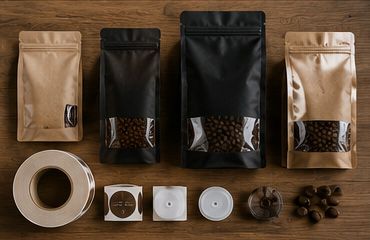
- Packaging: Bag sealers and degassing-valve bags protect freshness between roast and cup
- Throughput match: Your grinder and sealer should keep up with your roaster’s daily output
Browse coffee roasters, commercial grinders, and packaging & sealing equipment to match equipment to your model. Not sure which combination fits your volume? See how we equip independent roasteries, café + roastery hybrids, and wholesale production.
Making Your Decision
Start by answering these questions:
- What’s your weekly roasted volume (and where will it be in a year)?
- What’s your quality positioning (standard vs. specialty)?
- What’s your available footprint and venting?
- What’s your total equipment budget (roaster + grinder + packaging)?
- Do you have reliable power and (if needed) gas supply?
At CoffeeEQ, we help buyers research and compare coffee roasters — from 1 kg sample units to 30 kg+ production systems — and the suppliers who offer them. We focus on helping you shortlist options that fit your volume, space, and budget; supplier specifications, certifications, and commercial terms should always be confirmed directly before you order.
Ready to spec your roastery? Contact our team to discuss your requirements and get help comparing options that fit your volume, space, and constraints.